
African Air Cargo: Demand Growth Masks Severe Capacity Constraints in First-Half 2026
African air carriers recorded a 4.7% year-on-year increase in air freight demand at the end of June 2026. Driven by the continued strength of the Asia-Africa trade corridor, this expansion aligns with a resilient global market (+8.5%). However, a contraction in regional transport capacity highlights tight fleet allocation strategies and a persistent deficit in dedicated cargo infrastructure.
Sustained Growth Driven by the Asia-Africa Axis and Global Momentum
Sector data released by the International Air Transport Association (IATA) confirms the resilience of African air cargo entering the second half of 2026. With a 4.7% year-on-year demand increase in June (measured in Cargo Ton-Kilometers, CTKs), the continent contributed to positive global market dynamics (+8.5%). Internationally, activity was bolstered by urgent shipments and high-value tech product deliveries, particularly across North America (+13.1%) and Asia-Pacific (+7.9%).
At the center of Africa’s air logistics network, the trade corridor with Asia continues to act as a primary growth engine. Reporting a 0.9% volume increase in June, the Asia-Africa route marked its twelfth consecutive month of positive expansion. This continuity underscores the structural integration of consumer goods and industrial equipment flows moving from Asian manufacturing hubs into emerging African markets.
                   SECTOR DYNAMICS (JUNE 2026 / JUNE 2025)

 [Global Market]    Demand (CTK): +8.5%   │  Capacity (ACTK): +4.4%
 ───────────────────────────────────────────────────────────────────
 [Africa]           Demand (CTK): +4.7%   │  Capacity (ACTK): -7.1%
Capacity Deficit Drives Up Load Factors
The defining feature of the African market remains the divergence between cargo volume growth and available space. Unlike other global regions where capacity expanded (+4.4% worldwide), African airlines experienced a 7.1% contraction in available capacity (Available Cargo Ton-Kilometers, ACTKs).
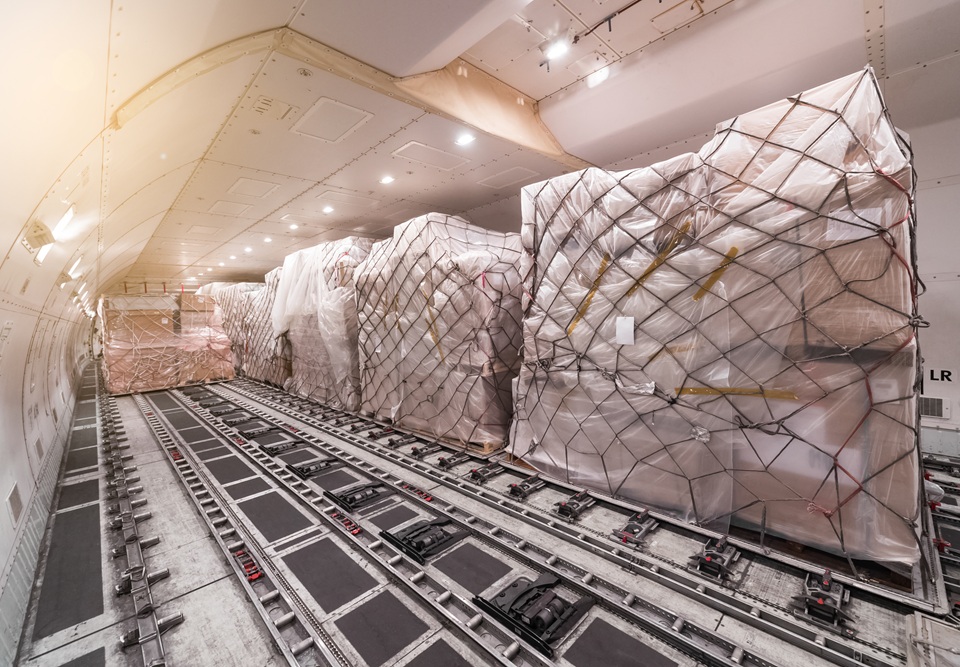
This reduction in offer—frequently caused by passenger aircraft redeployment or a shortage of dedicated freighters—forced operators to optimize belly-hold utilization. Consequently, the regional load factor rose by 5.4 percentage points year-on-year to 48.1%, surpassing the global average of 46.9%.
| Region | Demand Growth (CTK) | Capacity Growth (ACTK) | Load Factor |
| North America | +13.1% | +6.1% | 43.2% |
| Asia-Pacific | +7.9% | +3.8% | 54.1% |
| Europe | +6.9% | +3.4% | 51.8% |
| Middle East | +5.6% | +2.1% | 45.5% |
| Africa | +4.7% | -7.1% | 48.1% |
| Latin America | +3.5% | +1.2% | 36.4% |
Macroeconomic Drivers and Operating Cost Structures
Air cargo operations benefited from a favorable macroeconomic environment, supported by a 5.2% expansion in global trade over the year. Operationally, a 20% month-on-month drop in jet fuel prices provided temporary relief for airline operating margins.
However, financial pressure remains elevated: jet fuel prices were still 45.8% higher than in June 2025. For African carriers, where fuel accounts for a disproportionate share of operating expenses due to local supply chain surcharges and foreign exchange constraints, fuel price volatility continues to delay the expansion of new scheduled cargo services.
Strategic Outlook: Fleet Arbitrage and AfCFTA Integration
While improved load factors reflect higher yield per flight, persistent capacity deficits risk bottlenecking key regional trade routes. To capture value from intra-African trade expansion under the African Continental Free Trade Area (AfCFTA), public and private stakeholders must address three core priorities:
-
Fleet Conversions & Leasing: Accelerate the acquisition and Passenger-to-Freighter (P2F) conversion of narrowbody aircraft tailored to intra-African regional routes.
-
Ground Infrastructure Modernization: Invest in secure cargo terminals, automated cold chain facilities for pharmaceutical and horticultural exports, and streamlined airport customs processing.
-
Traffic Rights Harmonization: Fully leverage the Single African Air Transport Market (SAATM) to liberalize 5th freedom rights specifically for all-cargo operations.
Although the second half of 2026 opens with solid baseline demand, exposure to global geopolitical risks—including shifting tariff policies and international trade disruptions—will require African operators to diversify their regional networks to secure long-term cargo revenues.