
EgyptAir Receives Its Fifth Airbus A350-900: Fleet Modernization and Strategic Implications
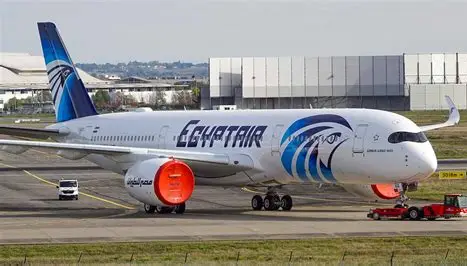
On November 8, 2026, EgyptAir welcomed its fifth Airbus A350-900, continuing the overhaul of its long-haul fleet. Delivered directly from Airbus’s Toulouse factory, this aircraft underscores the airline’s commitment to improving operational efficiency and competitiveness in international markets.
Targeted Modernization to Enhance Long-Haul Performance
The A350-900, configured in a two-class layout with 30 business and 310 economy seats, accommodates around 340 passengers. Known for its fuel efficiency and a range close to 18,000 kilometers, it enables EgyptAir to optimize operating costs while enhancing the passenger experience on high-demand long-haul routes.
This delivery is part of a broader order of 16 aircraft aimed at gradually replacing older Boeing 777-300ER models. Fleet renewal is critical to maintaining competitiveness, reducing maintenance expenses, and meeting increasing environmental standards.
Economic Impact and Regional Positioning
For Egypt, strengthening EgyptAir’s long-haul fleet supports ambitions to establish Cairo as a major regional air hub. A modern, efficient fleet attracts increased international traffic, boosting tourism and trade.
In terms of competition, the arrival of the A350-900 intensifies dynamics on African long-haul routes, encouraging regional carriers to accelerate their own modernization programs. Investors may view this as a sign of strategic professionalism and consolidation in an increasingly demanding sector.
Outlook for African Aviation
Regular deliveries of aircraft like the A350-900 by EgyptAir reflect a wider trend of fleet renewal among African airlines driven by the need for efficiency, sustainability, and improved service quality.
In the long term, this trend is expected to enhance continental and international connectivity while presenting challenges related to infrastructure management and skills development.
Through this initiative, EgyptAir reinforces its key role in the evolution of African air transport, highlighting the importance of an integrated strategy to sustainably support sector growth