
Air Sénégal charters an A330 on its Dakar-Paris route

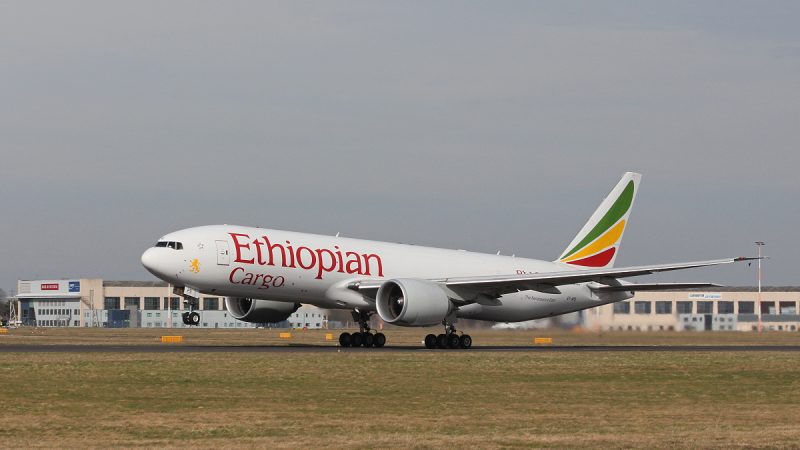
Airbus A330 by Air Sénégal on the Dakar-Paris route:
To address operational constraints on its flagship route connecting Dakar to Paris, the national airline Air Sénégal has turned to chartering an Airbus A330. This measure aims to ensure the continuity and regularity of service on this strategic route.
SENEGAL: Air Sénégal charters an A330 on Dakar-Paris, a forced choice that reveals the crisis of its long-haul fleet
Deprived of its two Airbus A330-900neos tied up in a financial dispute, Air Sénégal is forced to maintain its strategic Dakar-Paris route (HC403/404) through ACMI leasing. An emergency solution that highlights the operational and financial pressures faced by the national airline.
A vital route maintained through ACMI
Since January 2026, the daily link between Blaise Diagne International Airport (DSS) and Paris CDG has been operated by a leased aircraft. After a Boeing 777-200ER from MyWay Airlines, a private Georgian airline, the Senegalese airline now uses an Airbus A330 chartered with a foreign crew to maintain its slots at Roissy.
This use of ACMI (Aircraft, Crew, Maintenance, Insurance) is not new for Air Sénégal. Back in 2019, when the route was launched, the airline operated with an A340-300 leased from Hi Fly Malta, before the arrival of its A330neo “Casamance” (9H-SZN then 6V-ANB). The crux of the problem: two A330neo grounded According to information confirmed by the Senegalese press in early October 2026, the two A330-900neo, acquired through a financial arrangement involving Banco Santander (70% financed) and a sovereign guarantee from Senegal, are involved in a dispute with the leasing company Casamance Owner. Air Sénégal claims to have paid 30% and repaid more than 50% of the loans, but the return of the aircraft was enforced after critical availability rates (47% for 6V-AMA, 12% for 6V-AMB according to Confidentiel Afrique). Consequence: four Airbus A319/A321 of the medium-haul fleet was also seized in 2025 for unpaid rents, forcing the airline to reduce its capacity and even temporarily operate Paris routes with a leased Boeing 737-800.
The crew issue that sped up the chartering The decision to fully outsource the Dakar-Paris route was accelerated on September 17, 2026, by the suspension of all cabin crew assigned to the route. Air Sénégal mentioned an internal investigation into suspicions of paid parcel transport (‘GP’), with amounts up to 15 euros/kg, and the discovery of a suspicious substance in a milk jar carried by a flight attendant. Interpol is conducting a separate investigation. To ensure continuity, MyWay Airlines provides both aircraft and crew, a practice that diminishes the ‘Esprit Teranga’ experience sold by the airline. Stakes for the West African market For Dakar: chartering an A330 costs between 450,000 and 650,000 USD per month in ACMI, which is 2 to 3 times the operating cost. That’s 2 to 3 times the in-house operating cost. An unsustainable model that weakens the Diass hub compared to Abidjan and Lomé. For investors: despite the order of 9 Boeing 737 MAX announced at the 2025 Dubai Airshow with Minister Yankhoba Diémé present, Air Sénégal’s financial credibility is still damaged. The Carlyle/Casamance Owner dispute is being closely watched by lessors like AerCap and Carlyle Aviation.
For passengers: the series of cancellations on October 3-4, 2026 at AIBD (flights to Paris and Abidjan) with passengers sleeping on the floor confirms a deep operational crisis.
Perspective: Chartering an A330 on the Dakar-Paris route is not a strategic choice but a patch. As long as the dispute over the two A330neo aircraft is not resolved and the A320 fleet is not secured, Air Sénégal will remain dependent on the ACMI spot market, to the detriment of its profitability and its image as a national carrier. The next step will be decisive: finalizing the restructuring of its debt and stabilize a clean long-haul fleet by the end of 2026.