

Airport Security: KAA Bolsters Emergency Response Capacity to Support Nairobi Hub Growth
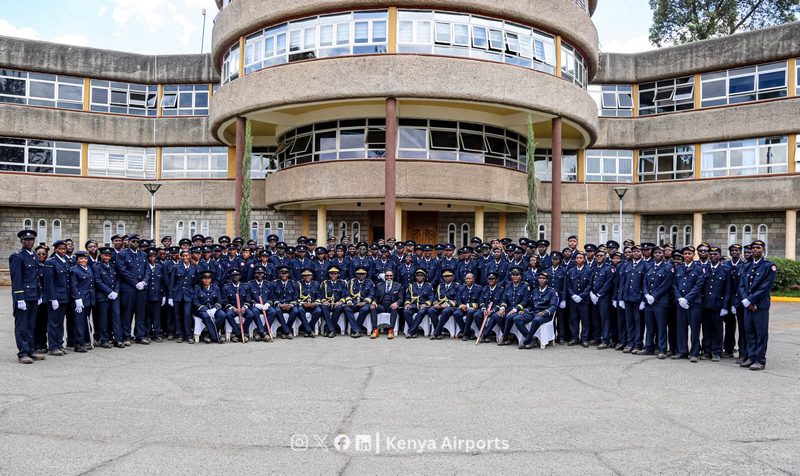
Amid expanding air traffic across East Africa, operational safety management has emerged as a strategic prerequisite. The Kenya Airports Authority (KAA) has integrated nearly one hundred specialized firefighters to meet stringent international regulatory standards and support the scale-up of the national airport network.
Emergency Response Workforce Expansion
Following an intensive four-month training program focused on Aircraft Rescue and Firefighting (ARFF), the Kenya Airports Authority (KAA) has formalized the deployment of 98 new airport firefighters. This cohort will reinforce emergency response brigades stationed across Kenya’s airport network, including international gateways such as Nairobi Jomo Kenyatta (JKIA) and Mombasa Moi.
This initiative aligns with safety standards set by the International Civil Aviation Organization (ICAO), which mandate specific equipment levels and certified personnel (ARFF Category) based on the size and frequency of aircraft servicing each facility.
Maintaining ICAO Compliance to Protect Regional Hub Status
In an increasingly competitive regional landscape alongside hubs in Addis Ababa and Kigali, maintaining regulatory compliance at Jomo Kenyatta International Airport (JKIA) remains a key priority. Modernizing emergency response capabilities serves as an operational lever to retain international certifications and secure landing slots for long-haul carriers.
| Strategic Imperative | Direct Impact on the Kenyan Aviation Sector |
| Certifications & Audits | Sustained compliance with ICAO Annex 14, preventing downgrades in airport classification. |
| Insurance Risk Management | Optimal firefighting capabilities reduce overall risk profiles, helping mitigate insurance premiums for airlines. |
| Operational Continuity | Faster emergency response times minimize disruption, ensuring rapid runway reopenings following incidents. |
Economic Implications for the Commercial Ecosystem
Beyond regulatory compliance, upgrading airport rescue capabilities fits into Kenya’s broader strategy to attract private investment across transport and logistics.
-
For Airlines: Preserving or elevating ARFF category levels permits the operation of wide-body aircraft (such as Boeing 777/787 or Airbus A350 platforms). This is essential for expanding flag carrier Kenya Airways’ long-haul network and attracting foreign carriers.
-
For Insurers and Investors: Robust ground safety standards improve overall risk ratings, an important metric when structuring public-private partnerships (PPPs) for upcoming terminal expansions or negotiating insurance contracts.
Outlook and Regional Perspective
While this influx of trained personnel strengthens immediate operational efficiency, KAA faces ongoing requirements to update specialized ground hardware—including modern crash tenders and advanced fire simulators—to keep pace with rising passenger and cargo volumes. Over the coming years, balancing safety compliance, fleet modernization, and capital allocation will determine Kenya’s ability to defend its market share against emerging sub-regional rivals.