
Air Mauritius: Optical Return to Profitability Amid Major AHL Restructuring
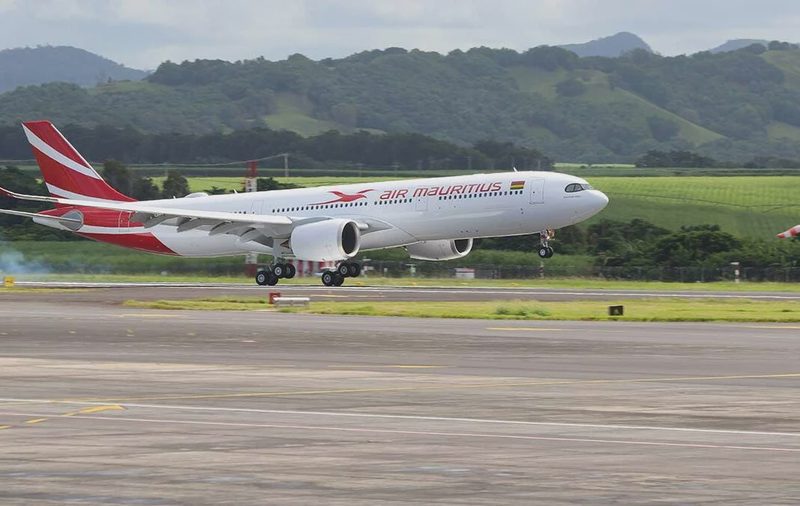
For the 2025-2026 financial year, Air Mauritius reported a positive net result of €78.63 million, largely driven by exceptional accounting adjustments and favorable foreign exchange conditions. As the carrier’s equity returns to positive territory, the Mauritian government is initiating a strategic breakup of the Airport Holdings Ltd (AHL) conglomerate to isolate infrastructure management from airline operations.
Financial Profitability Driven by Accounting and Cyclical Factors
Following several years marked by severe deficits and corporate restructuring under voluntary administration during the pandemic, Air Mauritius has stabilized its balance sheet. The national flag carrier logged a net profit of €78.63 million (approximately MUR 4.1 billion) for the 2025-2026 fiscal year.
However, a detailed balance sheet analysis reveals that this performance relies significantly on non-recurring, exceptional items:
-
Revaluations and Adjustments: The downward revision of provisions originally set aside for aircraft lease returns, combined with the accounting derecognition of unredeemed post-Covid-19 travel vouchers, generated a mechanical boost to the bottom line.
-
FX and Fuel Dynamics: A strong Euro relative to the Mauritian Rupee and unrealized foreign exchange gains bolstered export revenues, while jet fuel prices remained moderate over the period.
This accounting shift restored equity to a positive €26 million, re-establishing theoretical solvency for the airline.
       Net Profit 2025-2026: €78.63M (~MUR 4.1B)
       Restructured Equity: €26M (Exit from deficit)
       Primary Drivers: Provision reversals, expired vouchers, favorable fuel prices
Operational Discipline: Executive Management Urges Caution
Despite these positive headline figures, executive management at Air Mauritius maintains a cautious outlook. Chief Executive Officer Andre Viljoen emphasized the structural vulnerability of this recovery in the face of macroeconomic volatility anticipated for the 2026-2027 financial year.
Anticipated energy cost increases alongside rising ground-handling and Maintenance, Repair, and Overhaul (MRO) expenses necessitate strict operational efficiency measures. Stripped of one-off accounting write-backs, the airline’s core business model remains exposed to fluctuations in regional Indian Ocean tourism demand.
Unbundling Airport Holdings Ltd: Separating Infrastructure from Flight Operations
Parallel to the financial reporting, the Cabinet of Mauritius approved the dissolution of the vertically integrated structure, Airport Holdings Ltd (AHL). This breakup ends a centralized governance model in favor of a clear sectoral separation between commercial airline operations and public infrastructure management.
The new institutional architecture divides into two distinct units:
-
Aviation Division (Under Air Mauritius Ltd): Focuses exclusively on core commercial passenger and cargo operations, ground handling services, inflight catering, and aviation training centers.
-
Infrastructure Division (Under Airports of Mauritius Ltd – AML): Restores sole authority to the airport operator for managing terminals, real estate assets, Fixed-Base Operator (FBO) facilities, and the island of Rodrigues’ airport platform.
Additionally, Airport of Rodrigues Ltd—which operates Plaine-Corail Airport—comes under direct state control. This strategic takeover aims to secure public and multilateral funding required for critical infrastructure upgrades, including a new long-haul runway project.
Sectoral Impacts and Strategic Outlook
The overhaul of the Mauritian aviation landscape carries direct implications across the regional ecosystem:
-
For the Mauritian State: Direct oversight of key island infrastructure eliminates potential conflicts of interest between commercial profitability at Air Mauritius and territorial connectivity mandates.
-
For the Airline: Freed from AHL’s oversight, Air Mauritius regains a streamlined operational focus strictly targeting route network competitiveness, though it forfeits direct access to airport infrastructure revenues that previously bolstered its balance sheet.
-
For Investors and Lenders: Clarifying the roles between the airport operator (AML) and the airline provider improves financial transparency, establishing a baseline for future capital raising targeted at fleet or terminal expansion.
This structural shift occurs amid intensifying competition across Indian Ocean routes, where Gulf carriers and regional players continue expanding market capacity. While the equity reset provides short-term financial relief, Air Mauritius’ long-term viability hinges on translating temporary headwinds into sustainable operational profitability.