
TAAG expands aviation talent pipeline through new training partnership with H2AIR
Angola’s national carrier is strengthening its human capital strategy through a new partnership with a specialized aviation training provider. The initiative reflects a growing focus across African aviation markets on building local technical expertise to support fleet expansion and operational reliability.
A strategic partnership to bridge training and industry needs
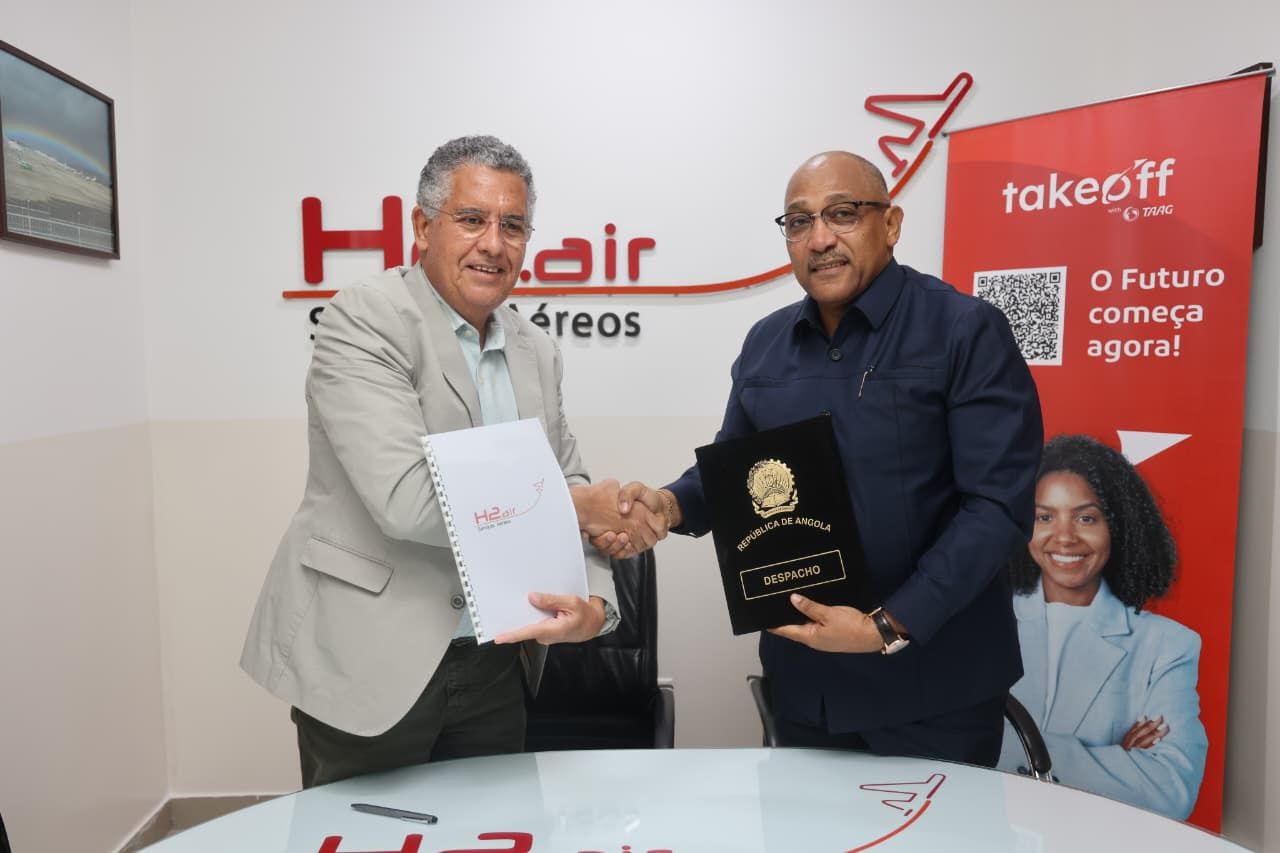
TAAG Angola Airlines has signed a cooperation agreement with H2AIR Air Services as part of its “Takeoff with TAAG” internship program.
The agreement, formalized by CEO Nelson de Oliveira and H2AIR Director General Carlos Alberto Godinho Gomes, aims to strengthen collaboration between the airline and training institutions—an increasingly critical axis for the development of sustainable aviation ecosystems in Africa.
Addressing a structural skills gap in African aviation
The partnership targets key operational domains, including:
- aircraft maintenance,
- aeronautical engineering,
- flight operations.
These areas remain among the most constrained in terms of qualified workforce availability across the continent.
By integrating H2AIR into its internship pipeline, TAAG is seeking to align training outputs with operational requirements, reducing reliance on external expertise and improving long-term cost efficiency.
Scaling up a structured internship model
The second edition of the “Takeoff with TAAG” program is expected to host 80 interns, including:
- 65 from Angolan institutions,
- 15 from international training centers.
The program is designed to immerse participants in real operational environments, enabling them to develop:
- technical competencies,
- operational know-how,
- and behavioral skills aligned with industry standards.
This approach reflects a shift from theoretical training to hands-on, competency-based development, increasingly seen as essential in aviation.
Supporting fleet growth and operational performance
As African airlines expand fleets and networks, human capital constraints are emerging as a critical bottleneck.
For TAAG Angola Airlines, investing in local talent is not only a social initiative but also a strategic lever to ensure operational reliability, safety compliance, and cost control.
Developing in-house expertise in maintenance and operations can significantly reduce:
- dependency on foreign technical services,
- turnaround delays,
- and operational risks.
Market implications
For Angola:
A step toward building a more self-sufficient aviation ecosystem, aligned with national development goals.
For TAAG:
A long-term investment in workforce readiness to support growth and modernization.
For training providers:
New opportunities to integrate more closely with industry needs and secure stable talent pipelines.
For African aviation:
A broader signal that skills development is becoming a strategic priority, alongside infrastructure and fleet investments.
Outlook: human capital as a key competitiveness driver
The TAAG–H2AIR partnership highlights a critical shift in African aviation: from infrastructure-led growth to capability-driven development.
As competition intensifies and regulatory standards rise, airlines that invest in local skills, technical training, and workforce development will be better positioned to scale sustainably.
In this context, structured internship programs could become a cornerstone of aviation strategies across the continent, helping bridge the gap between education systems and industry demands.
By the editorial team